

ISO 9001 Certification
ISO 9001 is defined as the international standard that specifies requirements for a quality management system (QMS). Organizations use the standard to demonstrate the ability to consistently provide products and services that meet customer and regulatory requirements. It is the most popular standard in the ISO 9000 series and the only standard in the series to which organizations can certify.
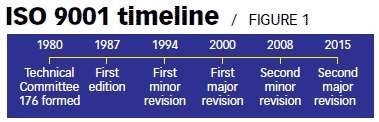
ISO 9001 was first published in 1987 by the International Organization for Standardization (ISO), an international agency composed of the national standards bodies of more than 160 countries. The current version of ISO 9001 was released in September 2015.
ISO 9001 is based on the plan-do-check-act methodology and provides a process-oriented approach to documenting and reviewing the structure, responsibilities, and procedures required to achieve effective quality management in an organization. Specific sections of the standard contain information on many topics, such as
- Requirements for a QMS, including documented information, planning and determining process interactions
- Responsibilities of management
- Management of resources, including human resources and an organization’s work environment
- Product realization, including the steps from design to delivery
- Measurement, analysis, and improvement of the QMS through activities like internal audits and corrective and preventive action
Changes introduced in the 2015 ISO 9001 revision are intended to ensure that ISO 9001 continues to adapt to the changing environments in which organizations operate. Some of the key updates in ISO 9001:2015 include:
- The introduction of new terminology
- Restructuring some of the information
- An emphasis on risk-based thinking to enhance the application of the process approach
- Improved applicability for services
- Increased leadership requirements
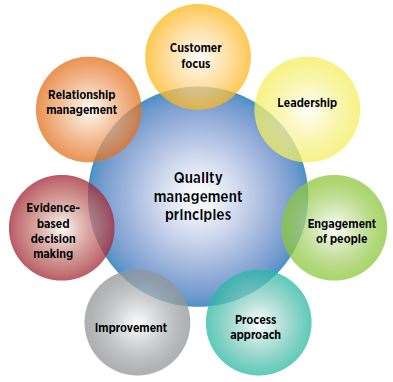
The Seven Principles of ISO 9001:2015
Originally published in 1987, ISO 9001 underwent revisions in 1994, 2000, and again in 2008. The latest revision was published in September 2015.
- ISO 9001:1994 included changes to improve the control of design and development clause, as well as provide other clarifications. The 1994 series also slightly modified the role of ISO 9002 and 9003
- The ISO 9001:2008 revision sought to clarify issues raised during the application of ISO 9001:2000.
WHAT ARE THE BENEFITS OF ISO 9001?
ISO 9001 helps organizations ensure their customers consistently receive high quality products and services, which in turn brings many benefits, including satisfied customers, management, and employees.
Because ISO 9001 specifies the requirements for an effective quality management system, organizations find that using the standard helps them :
- Organize a QMS
- Create satisfied customers, management, and employees
- Continually improve their processes
- Save costs
In Nevada, the Clark County School District used ISO 9001 to save $174 million over 10 years in actual expenditures and cost avoidance. More than 3,000 employees were trained to the standard, enabling three critical components of the system’s success: training, communication and respect, and efficiency.
ISO 9001 is the only standard in the ISO 9000 series to which organizations can certify. Achieving ISO 9001:2015 certification means that an organization has demonstrated the following:
- Follows the guidelines of the ISO 9001 standard
- Fulfills its own requirements
- Meets customer requirements and statutory and regulatory requirements
- Maintains documentation
Certification to the ISO 9001 standard can enhance an organization’s credibility by showing customers that its products and services meet expectations. In some instances or in some industries, certification is required or legally mandated. The certification process includes implementing the requirements of ISO 9001:2015 and then completing a successful registrar’s audit confirming the organization meets those requirements.
Organizations should consider the following as they begin preparing for an ISO 9001 quality management system certification:
- Registrar’s costs for ISO 9001 registration, surveillance, and recertification audits
- Current level of conformance with ISO 9001 requirements
- Amount of resources that the company will dedicate to this project for development and implementation
- Amount of support that will be required from a consultant and the associated costs
 EN
EN  TR
TR